|
→ View in browser
When I was a bachelor student, the 9am lecture was my constant enemy. Between the gloomy Dutch weather and having to commute to a different city, it became way too easy to come up with excuses not to go.
Now, years later, as I face the frequent monotony of a full-time job, the prospect isn’t looking so bad anymore. The lecture halls, getting to learn about interesting topics, taking notes for hours at a time… it seems to me as if I should’ve appreciated it more. Granted, I enjoy reading ‘dark academia’ books, and I usually picture a grander campus than the one I was attending, but even so: Wouldn’t it be nice to slip back into that life for a little while?
Turns out I can, and it doesn’t even require me to be enrolled anywhere. Plenty of people beat me to it, designing entire self-study programs from scratch, complete with reading lists, assignments, and even field trips for themselves.
I’ve mostly seen proof of these ‘personal curriculums’ on Substack, with example syllabi floating around on my homepage alongside personal essays and political rants. The trend is most often attributed to a TikTok by creator Elizabeth Jean, who encouraged others to create their own units based on creative fulfillment and child-like curiosity. It caught on, and the method is now being used to learn about everything from botany to fashion “it” girls through the decades.
Self-study may be having its moment now, but its roots can be traced back to much earlier. Art historian Rebecca Marks compared the trend to the studia humanitatis of Roman and Greek antiquity — the notion of reading widely across history, philosophy, and the arts for the sake of becoming a more knowledgeable person, not a more employable one. Back then, it was the favorite pastime of the lucky few who did not have to work. But those designing their personal curriculums in 2026 don’t fit that description. Many have jobs, squeezing their reading lists into evenings and weekends. This may even be the first time they’ve studied something purely because it interested them, rather than to get a passing grade or a pay rise.
That raises the question of what exactly they stand to gain, if not a job or the leisure of the classical elite. Critiques of institutional education — such as those of philosopher Ivan Illich — offers one possible answer: It argues that schools don't just teach students, they also convey that learning requires an institution's approval in the first place. Following that line of thinking, the personal curriculum crowd is proving they don’t need anyone’s permission to keep learning.
If so, the practice represents its own kind of rebellion, partly against the algorithm to reclaim otherwise wasted time. Scrolling should feel like downtime, but it often leaves you more depleted than you did before. A personal curriculum, on the other hand, has a structure to follow and milestones to celebrate, as you finish a chapter, book, or even entire reading list. That alone might explain half of its appeal.
But, I think the trend is just as much a push against the 9-5 grind itself. Starting a new job is always accompanied by a steep learning curve, as you’re expected to learn new systems or problem-solving logic in record time. But the more you start to know your way around, the less new knowledge you’re likely to acquire. A personal curriculum is then, in a sense, deliberate homeschooling — a way to keep learning for no other reason than wanting to.
That sounds pretty convincing. I’m not sure if I’ll create a months-long, structured curriculum, but nothing is stopping me from writing down a list of topics and diving into the rabbit hole headfirst. A recent exhibition got me interested in the history of Japanese ceramics, so I think I’ll start there.
Has the urge to teach yourself something caught up with you too? Feel free to share what you’ve been meaning to learn more about.
Anna
|
Some numbers
|
155,000
|
Learning platform edX's first-ever massive open online course (MOOC), MIT's Circuits and Electronics, pulled in 155,000 learners the moment it launched in 2012.
|
|
52%
|
52% of people who register for a massive open online course never actually start the program.
|
|
36%
|
Adults aged 25 and older now make up 36% of the US higher education student population, a share that is expected to keep growing.
|
|
Read between the lines
|
People are assigning themselves homework — for fun — Harmeet Kaur, CNN (2025)
A look at the motivations behind the personal curriculum trend through the eyes of those participating, framing it as a desire to reclaim focused learning and a response against growing anti-intellectualism in society.
|
|
|
Whatever Happened to MOOCs? — Graham Hillard, City Journal (2022)
Tracing the rise, fall from media hype, and resurgence of MOOCs over the past decade, the piece argues that they have claimed their rightful place in mainstream higher education.
|
|
|
Personal curriculums when they work, when they don't work, when they work better — Emily Spinach, Substack (2025)
An essay offering a sympathetic but candid critique of the personal curriculum trend, arguing that, while self-directed learning may be a great example of learning for learning's sake, it may not be sustainable without the "other people" element of formal education.
|
|
Read / Watch / Listen
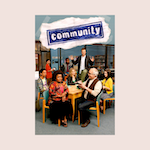
TV show: Community
A sitcom about a group of adults thrown together at a community college study group, poking fun at what it means to reinvent yourself later in life.
|
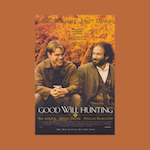
Movie: Goodwill Hunting
The story of a janitor at MIT who taught himself a top-level grasp of mathematics through library books, proving that he never needed the institution to reach his potential.
|
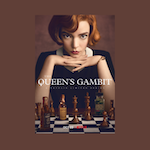
TV show: The Queen’s Gambit
A coming of age story following an orphan who becomes a chess prodigy in the 1950s and 1960s, purely due to her determination to teach herself the game.
|
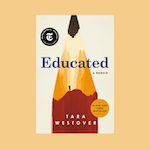
Book: Educated — Tara Westover (2018)
A memoir about a woman who grows up isolated from society to survivalist Mormon parents. Despite no formal schooling, her determined self-study eventually helps her earn a PhD from Cambridge.
|
Podcast: You Can Learn New Things at Any Age
Psychologist Rachel Wu discusses how adults learn, why learning can become harder with age, and what we can borrow from the way children approach new skills and unfamiliar subjects.
|
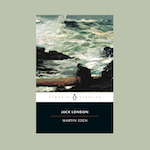
Book: Martin Eden — Jack London (1909)
A novel about a self-taught sailor who throws himself into literature, philosophy, and writing in an attempt to transform both his mind and his place in society.
|
|
Substack curriculums
Lit Girl
A Substack blog creating themed syllabi on everything in the ballpark of contemporary culture, from books and films to music and art.
|
postcards by elle
An archive of weekly syllabi, compete with reading lists, on a variety of topics, such as ‘Women in translation’ and ‘French new wave cinema’.
|
Modern Academia
Branding themselves as being for anyone who misses being a student, this blog explores a new literary theme, movement, or historical period every month, providing reading lists, research prompts, and essay questions.
|
|
|
Enjoying NOC? Your friends, family, community and colleagues might too. Here is a link for you to share this edition with them.
Link to this edition
|
A collection of learning resources
Khan Academy
A website offering completely free, self-paced courses covering math, science, art history and more.
|
freeCodeCamp
A community-based program offering free coding courses and certifications.
|
Smarthistory
A YouTube channel (and website) sharing free art history resources from every continent.
|
Project Gutenberg
A public archive and the world’s oldest digital library of over 57,000 free e-books.
|
Earthed
A free collection of online courses on the topics of nature and gardening, from caring for houseplants to harvesting rainwater.
|
Librivox
A free collection of public domain audiobooks read by volunteers from all over the world.
|
|
|
Our picks
|
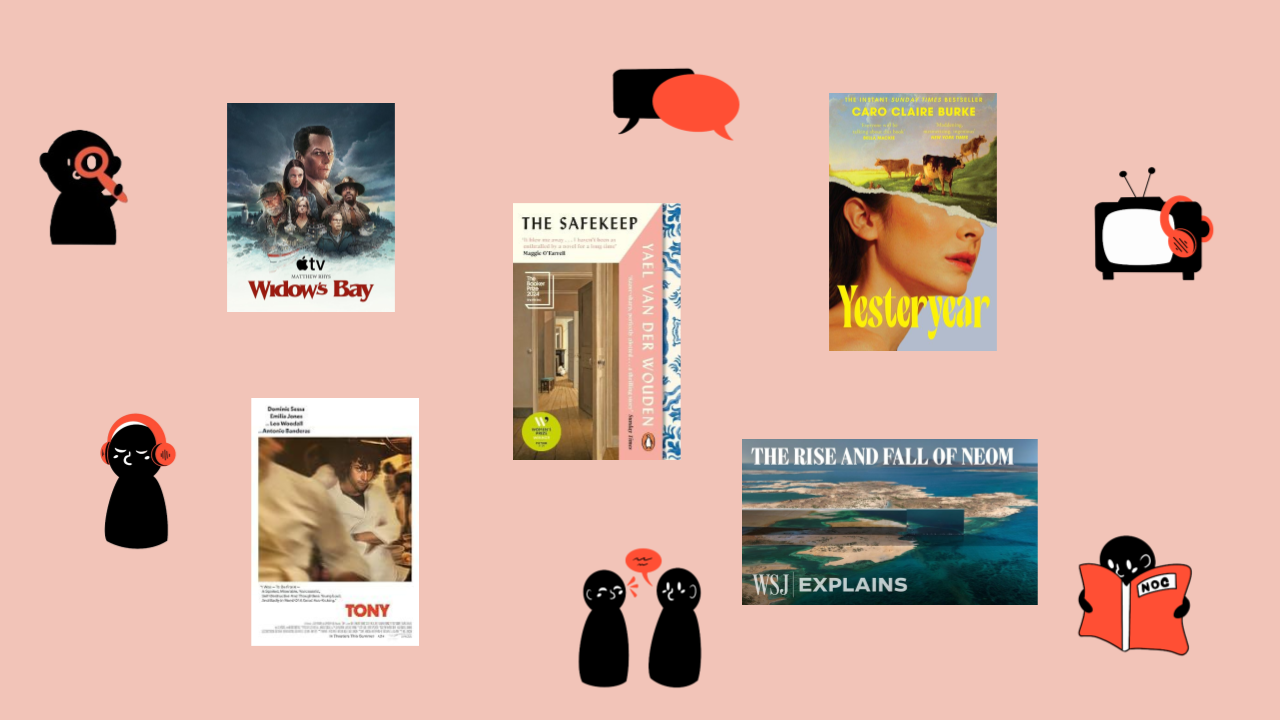
Yesteryear — One of 2026’s buzziest books, this darkly comic novel follows a tradwife influencer forced to confront the realities behind the traditional life she idealizes.
The Safekeep — A novel exploring desire, obsession and the legacy of WWII through two women sharing a house in the Dutch countryside in 1961.
Widow’s Bay — Set on a New England island, this comedy-horror show follows a mayor as tries to make his home a tourist hub, ignoring all warning signs of impending doom.
Tony — A biographical film following 19 year-old Anthony Bourdain as he discovers his love for cooking during one summer in Provincetown, Massachusetts.
Why the World’s Largest Megaproject Collapsed — A reportage by the Wall Street Journal on Neom’s The Line, the failed “city of the future” of Saudi Arabia.
|
|
|
NOC is a constant work-in-progress. We want to hear your thoughts, recommendations and ideas—reply to the newsletter via email or write to us on social media (LinkedIn or Instagram). Your input will help shape where we go next!
You can browse past editions on our website.
Was this email forwarded to you? You can register to our newsletter here.
One ask from us: to avoid our newsletter landing in your spam inbox, add our email address as a contact.
|
|