|
→ View in browser
As with every new year approaching, arriving with its familiar wind of promises and implied reinvention, I find myself almost liturgically checking where we stand in the Chinese calendar and what the Chinese zodiac horoscope has to say about my assigned animal: the rat.
I’ve never dug very far into astrology, aside from the inevitable Co–Star phase, surfacing mostly in those early party conversations where someone asks your sign and, within minutes, assembles a provisional personality from it. Astrology has usually felt less like a framework we could rely on than a convenient way to outsource certain traits to the stars, sidestepping the quieter labour of working through them. And yet, I’ve always been drawn to the Chinese zodiac and its twelve animals. Their simplicity gives the system an unexpected depth. No constellations, no gods, just familiar creatures carrying symbolic weight. Why, after all, should a rat be there?
The Chinese zodiac was never meant purely as prophecy, but as a cyclical way of giving form to time. Folktales like the Great Race explain how each animal earned its place, and in that story the rat wins not through strength but through strategy: hitching a ride on the ox and leaping ahead at the last moment. Cleverness, yes — but also timing, circumstance, maybe even luck. According to this year’s predictions, my rat now finds itself swimming against the current, opposed by the horse. As a swimmer myself, I find the metaphor oddly reassuring: resistance is familiar terrain. But maybe resistance is part of it too — not the opposite of luck, but the habit of moving through uncertainty, waiting for a gap to open. If the rat’s win was timing, strategy, and a touch of chance, then luck might be less about intervention and more about staying ready to slip through. Which leaves me with a question horoscopes never quite answer: what do we actually mean when we speak of luck?
The word luck carries the residue of its history. It enters English relatively late, borrowed from Low German and Dutch gelucke, where it meant favourable outcome rather than randomness. Earlier English reached instead for words like speed, as in God be our speed, invoking help, blessing, momentum. Other traditions retain similar distinctions. Chinese 福 (fú) gestures toward auspicious energy rather than chance, while Latin fortuna imagines luck as a goddess whose wheel turns unpredictably but never without moral consequence. Only later does luck begin to slide away from favour and destiny and toward uncertainty, mirroring the way success itself has been reframed as merit rather than inheritance or accident.
We tend to claim success as something we earn, while failure slips more easily into the language of circumstance. This pattern, often described as a self-serving bias, lets people internalise wins and externalise losses, preserving a sense of control when outcomes are uncertain. When belief itself becomes part of the equation, the effects turn tangible. In experimental settings, people told they were using a “lucky” charm or gesture persisted longer and performed better on difficult tasks, not because the task changed, but because confidence did. Is it luck when someone finds a parking spot just in time — or simply the payoff of circling the block one more time? Those who consider themselves “lucky” often stay engaged longer, notice opportunities sooner, and recover faster from setbacks, not because outcomes are altered, but because perception is.
Perhaps luck is not a force that intervenes, nor a reward that descends without cause, but the name we give to that stretch of water where we keep ourselves afloat long enough to spot an opening. We inherit it through stories, rehearse it through belief, and encounter it again when certainty breaks down. Perhaps that’s why it appears so persistently across myths, horoscopes, and equations alike: not because it explains anything, but because it names the space where explanation runs out.
Estelle
|
Some numbers
|
666
|
In Western Christian tradition, 666 is feared as the “Number of the Beast” from the Book of Revelation, giving rise to the phobia known as hexakosioihexekontahexaphobia. In contrast, in China 666 is considered lucky, as its pronunciation echoes the idea of things going “smoothly” or going well.
|
|
13
|
Many Western high-rise buildings historically omitted the 13th floor due to superstition, a practice that dates back decades and reflects a deep-rooted cultural fear of the number 13, as chronicled in a 1977 New York Times report. In Italy, however, 13 carries the opposite meaning: the number is traditionally considered lucky and associated with success, reflected in the expression fare tredici (“to hit the jackpot”).
|
|
8
|
In much of Asia, 8 is strongly associated with prosperity: in Chinese its pronunciation resembles the word for wealth, while in Japanese its written form (八) symbolises expansion. In Western Christian symbolism, it also represents renewal, linked to resurrection and new beginnings.
|
|
Read between the lines
|
Two Stories, One Man — Aeon (2022)
A deeply personal and analytical reflection on how we narrate success. The author recounts his own story from both a meritocratic and a luck-based lens, revealing how much our framing of life stories obscures the role of chance.
|
|
|
Why Athletes Owe More to Luck Than They Think — The Atlantic (2026)
This fresh and unexpected lens uses sports science to break down how tiny variables—from birthday month to tendon elasticity—shape athletic outcomes. It’s a compelling look at how randomness operates in spaces we often associate with grit and control.
|
|
|
Housing the Occult — 99% Invisible (2023)
Explores how luck, fear, and superstition are built into global architecture—from missing 13th floors to mirrored entrances in Chinese homes. Great crossover of belief and material space, ideal for broadening the theme beyond individual fortune.
|
|
Through art
|
Good Luck Spots — Felix Morelo (2024)
Known for his chalk-drawn faces scattered across NYC streets, Morelo introduces a new body of work mapping “good luck” and “bad luck” spots throughout the city—an intuitive geography based on superstition, instinct, and memory.
|

|
Good Luck — Sara Cwynar (2014)
In this photo-based collage from MoMA’s collection, Cwynar assembled symbols of beauty, success, and advertising. The work explores the visual language of aspiration and the quiet mechanisms behind cultural ideas of “good fortune.”
|
Superstitious Works — Peter Chan (2023)
Inspired by East Asian customs and his own upbringing, Chan’s practice transforms everyday rituals into playful, uncanny paintings—unlucky gifts, upside-down placements, and broken taboos all become portals into cultural logic.
|
|
|
A matter of luck
From clumsy lab errors to petty kitchen revenge, history’s greatest breakthroughs often prove that blind luck is just as powerful as genius. These six inventions show what happens when a "wrong" move creates exactly what the world didn't know it needed.
|
|
Enjoying NOC? Your friends, family, community and colleagues might too. Here is a link for you to share this edition with them.
Link to this edition
|
Plugged in
Digital fortunes and algorithmic rituals: the coded symbols we follow, the patterns we hope will favor us — luck is increasingly something we scroll, stream, and simulate.

Lucky Girl Syndrome to TarotTok: Is TikTok’s Algorithm Leading us into Spiritual Psychosis?
The podcast episode looks at how digital culture turned luck into a lifestyle: from manifestation trends to algorithm-friendly behavior, where “good vibes” are a strategy.
|

Magic Numbers
Users are increasingly treating the TikTok "For You" page as a mystical, prophetic force, transforming data-driven algorithmic curation into a form of divine intervention. This perception of digital rituals as spiritual devotion allows users to reframe data extraction as a personalized, fated experience.
|
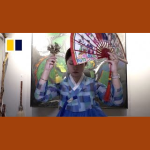
Shamanism finds new followers in young South Koreans
Shamanism is experiencing a resurgence among South Korean youth as young practitioners utilize social media, such as TikTok and YouTube, to rebrand ancient rituals for the digital age.
|
|
|
Our picks
|
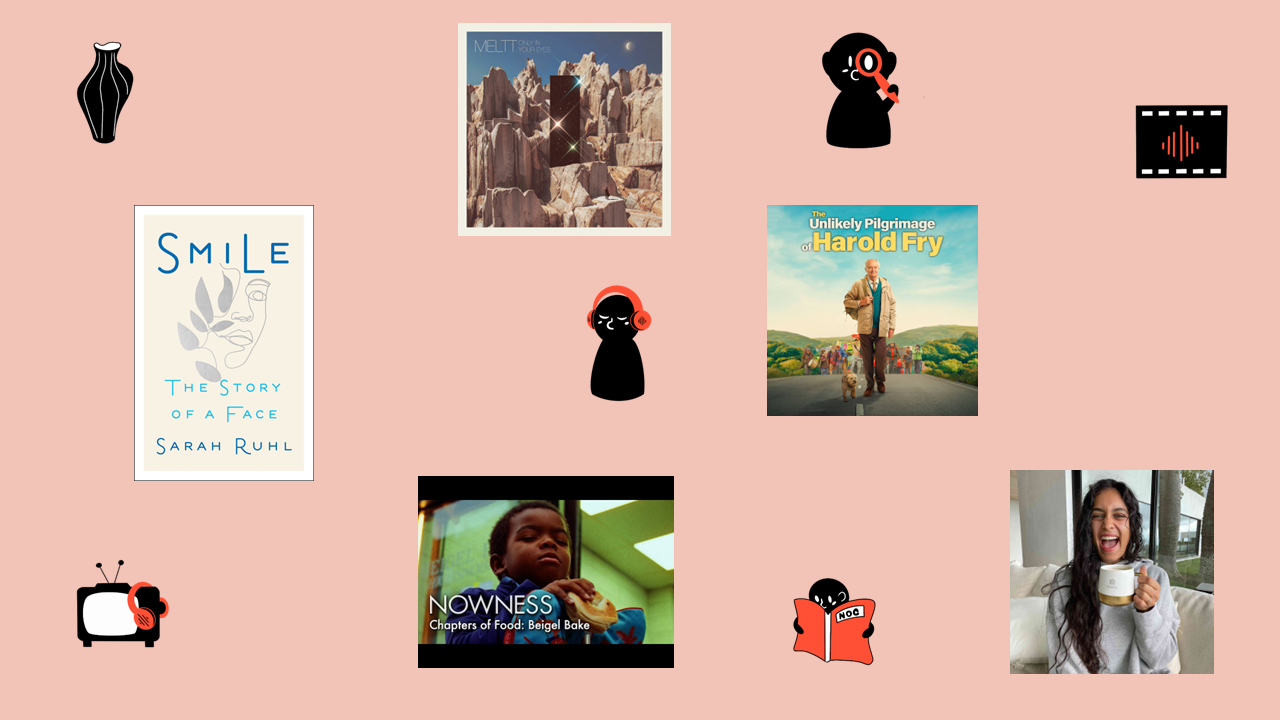
Smile: The Story of a Face — A playwright’s memoir about facial paralysis, motherhood, and reclaiming joy.
The Unlikely Pilgrimage of Harold Fry — The film adaptation of Rachel Joyce’s bestselling novel: following a retiree’s spontaneous 600-mile walk across England to deliver a letter, transforming his own life along the way.
A tea to fight off colds and coughs — Radhi Devlukia’s recipe for a ginger, tumeric, and carom seeds tea to help fight off the seasonal flu.
Beigel Bake — Sam Youkilis’ video portrait of one of London’s iconic bagel shop, open since 1974.
Meltt — A Canadian alternative-rock band that produces dreamy multi-layered songs.
|
|
|
NOC is a constant work-in-progress. We want to hear your thoughts, recommendations and ideas—reply to the newsletter via email or write to us on social media (LinkedIn or Instagram). Your input will help shape where we go next!
You can browse past editions on our website.
Was this email forwarded to you? You can register to our newsletter here.
One ask from us: to avoid our newsletter landing in your spam inbox, add our email address as a contact.
|
|