{{PreviewText}} 

edition 26:
Attention, please

→ View in browser

My phone must be listening to my conversations, right?

How else would I get an ad for a stainless steel sustainable toothbrush just an hour after talking about one with a friend? We have all asked ourselves this question. The answer, it turns out, is no. Advertising has simply gotten so incredibly good at using behavioral, geographical, and personal data that it doesn't need to listen to you to figure out what you might be thinking about buying (this article explains how).

So if our phones aren’t listening, what is happening? A very brief history of Western marketing: the 19th-century Industrial Revolution created a sudden need for companies to sell goods at scale, prompting a wave of newspaper ads and billboard campaigns. The arrival of radio in the 1920s allowed brands to reach millions of customers simultaneously, while television in the 1950s added a powerful visual dimension. Then came the Internet in the 1990s, which radically transformed the landscape by enabling direct communication via email, granular customer segmentation, and web analytics. The subsequent rise of social media opened the door to two-way dialogue between brands and their audiences, and gave birth to influencer marketing. And now, marketing automation and AI are taking personalization and targeting to unprecedented levels.

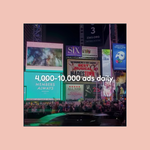
Digital advertising is a massive, sophisticated market worth $740.4 billion in 2026, and it shapes our online experiences in ways we barely notice anymore. Ads follow us while we research on our browsers, scroll through social media, watch YouTube videos, read the news, and listen to podcasts. A flow of sponsored results, unskippable 20-second videos, unsolicited jingles, and insistent calls-to-action. The implicit bargain is that digital advertising gives us access to content and services for free, in exchange for a little — or a lot — of our attention.

As a marketer, I spend a lot of time thinking about this professionally. What strikes me though is how often the topic has come up in recent conversations with people who are about as far from the industry as you can get. That's because the advertising world is undergoing a big change, with ads creeping into spaces we never expected to find them — on your refrigerator screen, in your Uber app while you wait for your ride, and very soon, inside your conversations with AI chatbots such as ChatGPT. The generation of creative assets and texts with AI has shortened the time required to push ads live, reducing the barrier to entry and with it — in many cases — the quality.

Advertising also takes subtler forms, though no less pervasive ones. Product placement in movies and TV shows has become so prominent that series like Netflix's Nobody Wants This and films like Challengers have drawn criticism for turning entire scenes into extended commercials. Sometimes, though, the effect is unplanned: sales of Eggo frozen waffles rose 14% in 2017 and 9.4% in 2018 after the brand appeared organically in Stranger Things — without any formal deal with the show.

Next time an eerily well-timed ad stops you mid-scroll, you'll know it was the result of a system that has been quietly learning you for years and has found an increased amount of channels to reach you. With this edition, I wanted to take a moment to step back and look into it, so that we can all be a little more aware of what it means for how we think, choose, and form preferences.

Have you also noticed this shift?

Sanjna

Some numbers

73%

Digital channels now account for nearly 73% of worldwide ad investment, with online spend exceeding $790 billion in 2024 (double what it was in 2019).

8 seconds

The average consumer’s attention span is believed to be shorter than 8 seconds.

$1 billion

No one thinks of Uber as an advertising company, yet it was expected to make $1 billion from ads in 2024.

Read between the lines

Icon of a person holding a journal

Opinion: OpenAI Is Making the Mistakes Facebook Made. I Quit. — Zoë Hitzig, The New York Times (2026)

A former researcher at OpenAI opens up about the alarm bells around introducing ads to ChatGPT, where people have been sharing their private thoughts, medical fears, and relationship wobbles for the past years.


Something Went Terribly Wrong With Online Ads — Kate Lindsay, The Atlantic (2024)

Lindsay walks us through how we came to live in the current constant advertising assault or adpocalypse and why being online now means being in a constant slalom to avoid pop-ups and roll-down banners.


The Battle for Attention — Nathan Heller, The New Yorker (2024)

How to get attention? This question is at the base of advertising. Heller writes on the current state of attention, how it gets commodified, and how we can reclaim it.

Mixed media


Screenshot of video

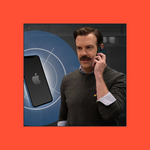
Why 36 Apple products appear in one episode of ‘Ted Lasso’

A look into how Apple products are placed into Apple TV shows. Fun fact: Apple does not allow any villains to use an iPhone on screen.

Screenshot of Nathaniel Drew's video

I tried to go 24 hours without ads… this is what happened

Content creator Nathaniel Drew challenges himself to try to avoid ads for a day while going around in Mexico City.

Screenshot of video essay

The ad invasion is about to get a lot worse

This video essay touches upon ad creep and “enshittification”, highlighting how it changes our digital experiences.

ABC of this edition

Adcreep

The "creep" of advertising into previously ad-free spaces.

Neuromarketing

The application of neuropsychology to marketing, studying consumers’ sensorimotor, cognitive and affective responses to marketing inputs.

Cost-per-mill

A calculation of how much it costs to reach 1’000 potential buyers.

Through the lens

Marketers have often been represented in series and movies: Friends’ Chandler and New Girl’s Schmidt, for example. Here below a selection of media with marketing as a main character: informative, entertaining, dystopic.


Poster of The Century of the Self

The Century of the Self — BBC (2002)

This four-part documentary series by the BBC traces how Freudian psychology was used in 20th century marketing.

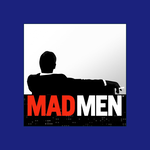
Poster of Mad Men

Mad Men — (2007-2015)

A series following the ups-and-downs of Donald Draper, a fictional, successful creative director in 1960-1970s Manhattan, US.

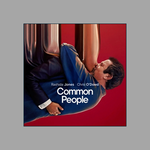
Poster of Common People

Common People — Black Mirror, Season 7, Episode 1

Following a tumor diagnosis, part of Amanda’s brain gets replaced with synthetic tissue. The operation is free, but she starts injecting ads into her speech.

Enjoying NOC? Your friends, family, community and colleagues might too. Here is a link for you to share this edition with them.

Link to this edition

Through art

Carbolytics — Joana Moll (2022)

Moll’s work looks into the opaque practices of the advertising technology system, exposing the market for data that backs it and its substantial carbon footprint.

Vase

Untitled (I shop therefore I am) — Barbara Kruger (1987)

A trained graphic designer, Kruger famously took the language of bold advertising to the artworld to send clear messages.


Since You Were Born installation — Evan Roth (2025)

In this installation that Roth calls “a self-portrait”, 4 months of Internet cache data are exposed onto high walls: family pictures next to ad banners, corporate logos next to Google Maps snippets.


Our picks

Our Picks Banner

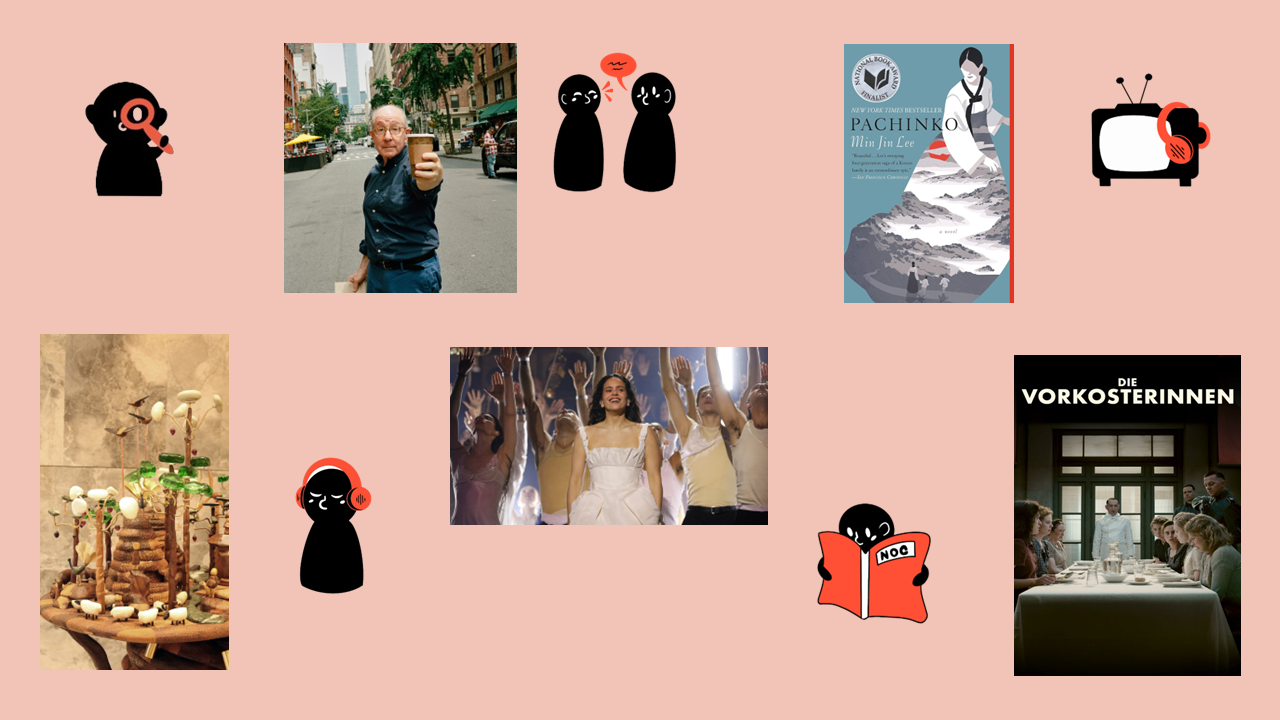
Pachinko — A novel spanning four generations of one Korean family’s life as they immigrate to Japan.

Jerry Saltz Has Visions — An interview with American art critic Jerry Saltz on how he found his way to the profession and his take on the future of criticism as a genre of writing.

Berghain (Live at The BRIT Awards 2026) — ROSALÍA’s live performance at the awards, featuring Björk and a dance performance with French dance troupe (LA)HORDE.

Out of Shed — Priyanka Shah’s design studio creates fairy tale-inspired wooden carousels.>/p>

Die Vorkosterinnen — A German movie, available on Netflix, on the women who were recruited to taste Hitler’s food for poison in 1944.

NOC is a constant work-in-progress. We want to hear your thoughts, recommendations and ideas—reply to the newsletter via email or write to us on social media (LinkedIn or Instagram). Your input will help shape where we go next!

You can browse past editions on our website.

Was this email forwarded to you? You can register to our newsletter here.

One ask from us: to avoid our newsletter landing in your spam inbox, add our email address as a contact.