|
→ View in browser
During a recent visit to my grandma’s, we spent a couple of evenings flipping through old photo albums. One image stuck with me in particular: my mother holding me as a baby, making a mock surprised face at the camera and looking uncannily like my sister. My parents kept up their film photography hobby throughout my childhood, developing photos in a darkroom they set up in the basement.
For my younger siblings, the past lives in a camera roll — the phone replaced the film camera as the memorykeeper of choice sometime in the late 2000s. They have more pictures than I do and can pull up exactly what they were up to on a specific date. But on more than one occasion, I’ve wondered whether – as a family – we’re not putting a little too much faith into one platform to keep our memories safe.
I’ve felt the loss first hand. When a previous phone broke, I had to say goodbye to an entire camera roll full of early high school recollections. At the time, I didn’t think much of the sneaky selfies taken with friends during band class. Turns out I’d really miss them ten years later, all because I couldn’t be bothered to sift through all the stuff to free up some cloud storage.
We’re collectively generating more images than ever before – 6 billion photos and videos are uploaded to Google Photos every day – while simultaneously becoming worse at keeping them secure. Researchers have started calling this the ’digital dark age’: so much information, scattered across so many platforms, that future historians will struggle to make sense of how we lived.
Myspace lost everything uploaded before 2016 due to a faulty server migration, including millions of songs, photos, and videos, many of which existed nowhere else. And now the Wayback Machine’s internet archive, the supposed safe fallback, is under threat itself. Major journalistic outlets – among them The New York Times – have started blocking it from accessing their content, afraid that AI companies will use it to train their systems. The irony: in trying to protect their work from one machine, they’re making it invisible to the historical record entirely.
These institutions at least put up a fight, but most of us give algorithms a little too much free rein. Features like Facebook’s ‘on this day’ are designed to surface ‘critical’ life events. Since they have no empathy, they’re just optimized to show us what we’d be most likely to share with others. That’s how we’re suddenly ambushed by a version of ourselves we’d rather forget or a former relationship that ended badly.
But the algorithm is only part of the problem. Before it even gets involved, the moment itself is already hazy. In psychology, this is called the ’photo-taking-impairment effect’: photographing something makes it harder to actually recall it, because we unconsciously outsource the encoding to the camera.
My parents had 24, maybe 36, exposures on a single roll of film. That required them to ask an important question before even pressing on the shutter: do I want to remember this moment? Having to choose is in itself an act of curation, paired with the deliberateness of arranging the photographs in an album. That gives the memories their meaning, and us a sense of who we are.
I’ll try bringing a film camera on my next trip, and maybe get some of those family photos off the cloud and into an album. I think some moments of our personal history deserve to be be backed up in two places, just for good measure.
Anna
|
Some numbers
|
23%
|
23% of web pages that were around in 2013 are no longer accessible, according to a Pew Research Center study from 2024.
|
|
70%
|
Around 70% of camera phone photos are never revisited, with only 27.8% ever looked at again in any meaningful way.
|
|
13
|
In the year 2024, every 13 days, the world took as many photos as were taken globally in 1998 at the peak of film photography.
|
|
Read between the lines

|
The race to save our online lives from a digital dark age — Niall Firth, MIT Technology Review (2024)
Thinking ahead on behalf of future ‘digital archaeologists’, this piece claims that these historians will find it difficult to piece together today’s internet — due to content that is dynamic, algorithm-driven, or app-based being hard to archive — which could result in them reconstructing our era in a way that is incomplete.
|
|
|
Posting for posterity — Terry Nguyen, Substack (2022)
Taking inspiration from video artist Shigeko Kubota’s idea, “I video, therefore I am”, this essay explores the idea of outsourcing our memory to platforms, despite their fragility or ability to erase parts of our personal history without warning.
|
|
|
When Your Digital Life Vanishes — Julian Lucas, The New Yorker (2026)
Connecting memory and identity, this article argues that losing digital data can feel like losing part of oneself. It features a data-recovery company, which people who desperately want to recover irreplaceable turn to, engaging in an act of “resurrecting” the past.
|
|
On screen & on air
Podcast: The Lost Cities of Geo — 99% Invisible (2020)
This episode explores the now extinct web hosting services GeoCities, once home to millions of personal pages and, at its peak, the third most popular destination on the internet. It traces how it rose to popularity, how it was put at risk, and how a few digital archivists attempted to save as much as possible before deletion.
|
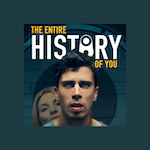
TV show episode: The Entire History of You — Black Mirror (2011)
The last episode of the first season of Black Mirror depicts a future where ‘grain’ technology records everything people do, see, or hear, allowing them to rewatch their memories. It explores themes like wanting to achieve the perfect memory and the ability of technology to erode personal relationships.
|
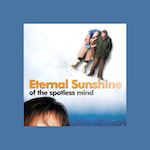
Movie: Eternal Sunshine of the Spotless Mind — Michel Gondry (2004)
A film that imagines a world where memories of a failed relationship can be medially erased. It questions whether all recollections — even the painful ones — aren’t intrinsically linked to who we are and worth hanging on to for that reason.
|
|
Digital archives
Internet Archive Wayback Machine
An initiative of the non-profit Internet Archive that creates a digital library of websites and cultural artefacts, allowing you to keep track of how a site has changed through the years.
|

Cameron’s World
Created by digital artist Cameron Askin, this interactive web collage pays homage to early internet culture by showcasing rescued pages from the now extinct GeoCities platform.
|
Discogs
The world’s largest music discovery and record collecting platform that operates like a “wikipedia for music”.
|

Are.na
A research tool designed to help you create your own digital archive through saving web links, uploading files, and connecting ideas to build a network of knowledge.
|
Rhizome ArtBase
An open-access online archive that contains over 2,200 works of digital and new media art, ensuring that they remain accessible for the future.
|
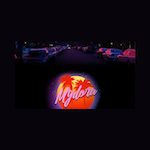
Mydora
A continuous streaming player that takes you on a trip into the lost archives of Myspace Music, featuring a collection of 490,273 recovered tracks.
|
|
|
Enjoying NOC? Your friends, family, community and colleagues might too. Here is a link for you to share this edition with them.
Link to this edition
|
Through art
|
Broken Diary — Shigeko Kubota (1969-86)
A pioneer of video art, the artist spent five decades documenting her own life in this autobiographical video series that acts as an intimate, self-constructed archive that treats the screen as an extension for personal memory.
|

|
Suns from Sunsets from Flickr — Penelope Umbrico (2006)
Finding "sunset" to be the most searched Flickr subject in 2006, this work cropped the suns from each image and printed them as thousands of identical machine prints, turning the internet's collective act of memory keeping into a single wall of light.
|
Ke LEFA LAKA : HER-STORY — Lebohang Kganye (2012-2013)
After losing her mother, the South African artist excavated her family photo archive and began inserting herself into it by dressing in her mother's clothes, mimicking her poses, and then layering the two images into photomontages where past and present merge.
|
|
|
|
Our picks
|
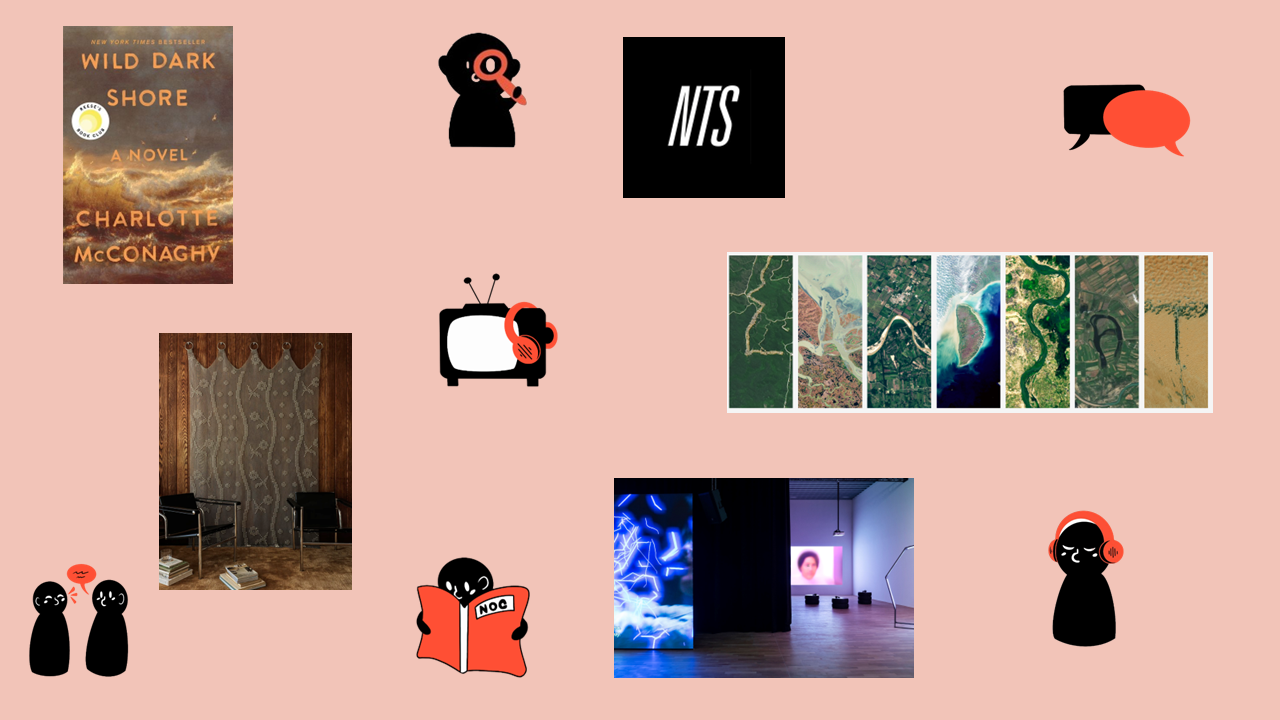
Wild Dark Shore — A novel by Charlotte McConaghy set on a remote sub-antarctic island that features the caretaker’s family as they navigate isolation, ecological grief and buried secrets after a stranger mysteriously washes ashore.
NTS Radio — A platform I’ve been using for new music discovery, hosting live radio stations and individual human-curated shows.
Your name in Landsat — A project by NASA where you can write your name with images taken from the sky.
K-NOW! Korean Video Art Today — An exhibition in Lugano showcasing contemporary Korean video art.
Wretched Flowers — An interior design studio by a wife-husband duo that works with characteristic metallic tapestry.
|
|
|
NOC is a constant work-in-progress. We want to hear your thoughts, recommendations and ideas—reply to the newsletter via email or write to us on social media (LinkedIn or Instagram). Your input will help shape where we go next!
You can browse past editions on our website.
Was this email forwarded to you? You can register to our newsletter here.
One ask from us: to avoid our newsletter landing in your spam inbox, add our email address as a contact.
|
|