|
→ View in browser
The other day I was listening to the radio absent-mindedly, letting it accompany my work more as background than focus. Between songs, the programme featured a guest speaking about her experience of burnout. At first, it barely registered. Then I found myself listening more closely — not because the topic was unfamiliar, but because of how easily she named it.
Still, I noticed a small hesitation: the reflex to keep the word at a manageable distance. It is the kind of hesitation that often appears around subjects still marked by stigma. Not because we lack the language, but because once something is named, it becomes harder to ignore.
Diagnosis has never been entirely neutral. Psychological and behavioral conditions were widely observed long before they were formally defined, yet they were often understood through moral, functional, or gendered frames rather than clinical ones. Trauma in war veterans, for instance, was recognised as early as the First World War, but it was long described through terms like shell shock or combat fatigue, language that framed suffering as a failure to endure rather than as injury. At the other end of the spectrum, hysteria gathered disparate symptoms under a single label, binding distress to culturally sanctioned narratives. Applied overwhelmingly to women, it translated pain, fatigue, anxiety (even resistance) into emotional excess. In both cases, diagnosis shaped whose distress was considered credible, and on what terms.
Today, diagnostic language travels faster. On social media, symptoms of ADHD, anxiety, or burnout circulate in brief lists designed for recognition. For some, this reduces stigma and offers long-awaited validation. For others, it invites forms of self-diagnosis shaped by algorithmic exposure, where complex experiences are condensed into formats that are easy to share, repeat, and apply to oneself. Greater openness widens access to language, but it also reshapes how quickly naming occurs, and sometimes before any clinical encounter.
At the same time, access to formal care remains uneven. In many European countries, mental health services operate under sustained pressure: overstretched public systems, uneven funding, and waiting lists that stretch for months. In this gap, alternative forms of guidance proliferate — online communities, mental health influencers, and increasingly AI-driven conversational tools positioned as therapeutic companions. These spaces can offer comfort, vocabulary, and a first sense of orientation. But without structure, they can also blur the line between understanding oneself and defining oneself too quickly.
In moments of uncertainty, attaching a label can offer temporary coherence. It helps organize experience, create connection, and provide shorthand for states that are otherwise difficult to articulate. Diagnosis can make someone legible in advance: explaining limits before they are tested, locating oneself within a shared vocabulary. Yet naming also reshapes perception. What brings relief to one person may quietly narrow how they are read by others, inviting assumptions about capacity or duration. This is perhaps why diagnostic language feels so useful and so uneasy at the same time.
When I think back to that moment on the radio, what stays with me is not the word burnout itself, but the pause that followed it — revealing how many of us still do not know exactly how to respond when someone names their distress. A diagnosis can bring relief and clarity, but it can also change how a person is seen. Perhaps the real tension begins there: not only in naming an experience, but in how others choose to receive it.
Estelle
|
Some numbers
|
13
|
The global median number of mental health workers is 13 per 100,000 people. The number gives a concrete sense of the distance between how often mental health is discussed and how limited formal support can still be.
|
|
4.3 billion
|
On TikTok, the tag #ADHD has gathered more than 4.3 billion views, turning diagnostic language into something searchable, shareable and instantly recognisable.
|
|
7 million
|
The online platform Unobravo says it has delivered more than 7 million online therapy sessions across Italy, Spain and France. placing psychological support within the familiar language of platforms, bookings, and on-demand services.
|
|
Read between the lines
|
Trauma and Mental Health — The Guardian (2025)
An exploration of how trauma unfolds in different contexts, tracing how mental-health narratives intersect with community, adversity, and resilience — and why recognising trauma often depends on the language available to describe it.
|
|
|
Mental health myths, social media, and relational language — Allie Volpe, Vox (2025)
A deconstruction of common mental-health misconceptions — from social-media effects to relational dynamics like love-bombing and narcissism — showing how everyday language around the psyche can both illuminate and oversimplify lived experience.
|
|
|
What we keep getting wrong about ADHD — Dr Abby Russell, Science Focus (2025)
A psychologist’s take on where public understanding of ADHD often goes astray, revealing how cultural narratives and lay interpretations diverge from clinical research and why certain terms resonate more widely than the science behind them.
|
|
A brief timeline
|
1949 — Mental Health Awareness Month begins — Founded by Mental Health America, the annual campaign bringing mental health into public conversation during the month of May.
|
|
1952 — First DSM Published — The American Psychiatric Association publishes the first Diagnostic and Statistical Manual of Mental Disorders, listing just over 100 conditions.
|
1980 — PTSD Formalised — Post-traumatic stress disorder is officially introduced as a clinical diagnosis, shifting trauma from moral failing to psychiatric injury.
|
|
2013 — DSM-5 — The fifth edition introduces and consolidates several “spectrum” categories, reflecting a move toward viewing mental health conditions along continua rather than fixed types.
|
2019 — Burnout as occupational phenomenon — The World Health Organization includes burnout in the International Classification of Diseases as an occupational phenomenon linked to chronic workplace stress.
|
2020–2022 — Global mental health surge during Covid — The COVID-19 pandemic led to an estimated 25% global increase in anxiety and depression during its first year, according to the World Health Organization — accelerating public conversation and institutional attention around mental health.
|
|
ABC of this edition
|
Masking
|
The act of hiding or adapting parts of one’s behaviour to appear more socially acceptable, often discussed in relation to autism, ADHD, and other forms of neurodivergence.
|
|
Therapy-speak
|
The use of psychological language in everyday conversation, from “boundaries” and “trauma” to “triggered” or “emotional labor.”
|
|
Neurospicy
|
An informal internet term used by some people to describe neurodivergence, often in a playful or self-identifying way.
|
|
Flip through
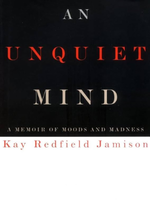
An Unquiet Mind - KayRedfield Jamison (1995)
A clinical psychologist’s memoir of living with bipolar disorder, reflecting on what it means to experience mental illness from both inside the diagnosis and within its professional framing.
|
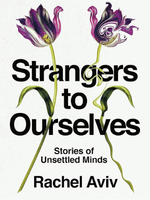
Stranger to Ourselves - Rachel Aviv (2023)
An investigative work probing the limits of psychiatric diagnosis in America, tracing how people come to be labelled (and sometimes mislabelled), and what those names do to their lives and relationships.
|
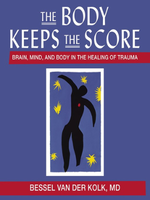
The Body Keeps the Score - Bessel van der Kolk (2014)
An exploration of trauma and its effects on the body and brain, tracing how psychiatric language evolved to recognise experiences that were once dismissed or misunderstood.
|

I Know This Much is True - Wally Lamb (1998)
A novel following twin brothers, one diagnosed with schizophrenia, exploring how psychiatric labels reverberate through family, loyalty, and identity.
|
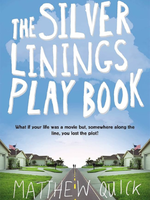
Silver Linings Playbook - Matthew Quick (2008)
A story of recovery, romance, and reinvention told through the perspective of a protagonist navigating emotional instability and the social expectations attached to diagnosis.
|
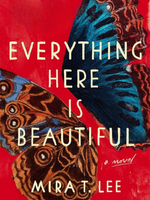
Everything Here is Beautiful - Mira T. Lee (2018)
A novel tracing one woman’s struggles with severe mental illness through the eyes of her sister, examining care, autonomy, and how naming shapes belonging.
|
|
|
Enjoying NOC? Your friends, family, community and colleagues might too. Here is a link for you to share this edition with them.
Link to this edition
|
Through art
|
Living Museum — Art-based mental health initiative
Founded at Creedmoor Psychiatric Center in New York in 1983, the Living Museum is an international network of open art spaces for people facing mental health challenges. Its model shifts attention from diagnosis to artistic identity, asking how care might also mean recognition, community, and the possibility of being seen differently.
|

|
Yayoi Kusama
Living voluntarily in a psychiatric hospital since the 1970s, Kusama has transformed her hallucinations and obsessive patterns into immersive artworks such as the Infinity Mirror Rooms. Her biography complicates diagnosis: the label informs how her work is interpreted, yet it also becomes inseparable from her artistic identity.
|
Neurotopias — Improper Walls, Vienna
A group exhibition on neurodiversity, accessibility and care, imagining what society might look like from feminist, disabled and neurodiverse perspectives. By questioning ideas of normalcy and pathologization, the exhibition connects mental health language to the social structures that decide who is supported, included or left to adapt.
|
|
|
|
NOC is a constant work-in-progress. We want to hear your thoughts, recommendations and ideas—reply to the newsletter via email or write to us on social media (LinkedIn or Instagram). Your input will help shape where we go next!
You can browse past editions on our website.
Was this email forwarded to you? You can register to our newsletter here.
One ask from us: to avoid our newsletter landing in your spam inbox, add our email address as a contact.
|
|